Feeding Stabby Nurse: A Designer's Review for Embroidery
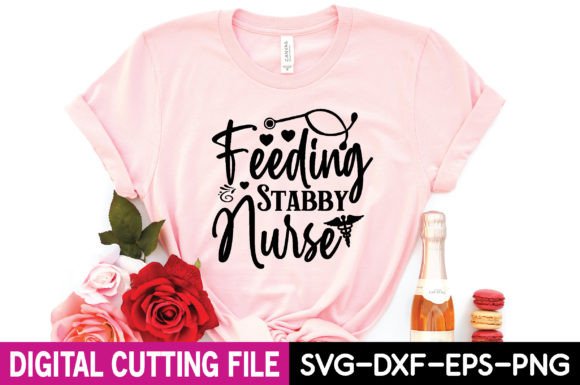
Whenever I see a design like Feeding Stabby Nurse, my first instinct is to picture it stitched out. Not on a screen, but on fabric, with real thread. This design lands with a specific, cheeky mood. It’s playful, with a darkly humorous edge that feels contemporary and a bit rebellious. The visual personality is straightforward and bold, relying on clear shapes and that distinctive, slightly ominous theme. It doesn’t whisper; it declares. For embroidery, that means it’s a design that belongs on projects where you want a statement, not a subtle accent.
The Natural Habitat for This Design
Let’s talk real projects. I’m envisioning a custom embroidered sweatshirt for a nurse friend, or perhaps a tote bag for someone in the medical field with a sense of humor. The theme naturally leans toward apparel and accessories for adults, though the description mentions uses for men, women, kids, or baby. For baby items or nursery decor, the “stabby” element would need careful consideration of the recipient’s taste—it’s likely more for a parent’s ironic baby bag than the actual infant’s bib. Its strongest fit, in my practical judgment, is in personalized gifts and custom apparel for a niche audience. Imagine stitching this onto a durable apron for a healthcare worker who loves a good laugh, or as a bold patch on a backpack. It has that boutique product vibe for a small shop that caters to a specific, savvy clientele.
Performance on the Hoop and the Product
In real-life embroidery situations, the success of this embroidery file hinges on clarity. The shapes need to hold up when translated into stitches. On a dense sweatshirt fleece, a satin stitch outline would need to be crisp. On a tote bag’s canvas, fill stitches for larger areas would perform well. For something like a cap or a curved surface, the design’s overall layout would need to be checked for distortion—the simpler the shapes, the better it adapts. I’d avoid very small hoop sizes here; giving the design some room to breathe will maintain its bold character and prevent tiny details from becoming muddled. Textured fabrics, like terry cloth for towels, could soften its edgy feel, while on smooth cotton for a t-shirt, it would pop sharply.
Where should you use it carefully? On very thin or stretchy fabrics, stabilizer choice is paramount to prevent puckering and keep that bold statement looking professional. On dark fabric backgrounds, thread color contrast is critical—you’d likely want bright, contrasting threads to keep the design from getting lost. And for products destined for frequent washing, like kitchen towels or everyday caps, ensuring a robust stitch density and secure stitches will affect longevity and customer trust in your handmade product.
Visual Appeal and Customer Perception
How does Feeding Stabby Nurse Svg affect the finished product’s value? For the right customer, it increases engagement significantly. It’s memorable and conversation-starting, which can elevate a simple embroidered item from a generic gift to a personalized, thoughtful one. For an Etsy seller or craft fair vendor, it offers a design that stands out in a crowd of more conventional themes. However, brand consistency matters. If your small shop product line is generally sweet and floral, this design might feel out of place. Its giftability is high but targeted—it’s perfect for that specific person, not a universal present. Professionally executed, with clean stitches and good fabric choice, it reinforces a maker’s skill in handling designs with distinct personality.
A Practical Scenario: The Custom Tote Bag
Picture this: a client requests a unique tote bag for a nurse graduating from a tough residency program. They want something witty and resilient. Feeding Stabby Nurse Svg comes to mind. My process would start with a test on scrap fabric of similar weight. I’d check the stitch density in the file, especially if there are filled areas, to ensure it won’t be too stiff or too sparse on the bag material. I’d run a simple black and white mockup to see how the shapes balance without color distracting me. Comparing it on both a light and dark background mockup helps finalize thread choices—perhaps a classic red and white for maximum impact. Using proper stabilizer for the bag’s fabric is non-negotiable to keep the embroidery flat and sharp after many uses.
This design, described as compatible with many cutting software machines, reminds me to confirm its suitability for my embroidery machine format and to verify the licensing terms clearly before any commercial use. Whether for a single personalized gift or for a line of merchandise in my craft business, knowing the license boundaries is essential for professionalism and peace of mind.
Embroidery Designer Notes for a Smooth Project
Before you commit this design to a final product, here are my grounded notes from the worktable. Always test on scrap first. It’s the golden rule. This reveals how small details, like any sharp corners or fine lines, will behave under the needle. Review the implied stitch density from the vector shapes; dense areas might require adjustments for different fabrics. Inspect the design layout for any potential weak points in stitching, especially if you plan to resize it for a different hoop size. For commercial embroidery projects or selling the finished product, explicitly confirm the licensing permissions. The description mentions it’s an instant download file, but the specifics for commercial sale of embroidered items need to be clear.
Consider the product’s entire life. If you’re embroidering a pillow cover or a blanket, how will the design feel integrated into the item? For a holiday gift, like a cheeky holiday apron, does the theme align with the recipient’s sense of humor? As a digital product seller, if you’re using this in printable mockups for your shop, its bold graphic nature will serve well as a design asset in previews.
Ultimately, Feeding Stabby Nurse Svg is a design with a strong, specific voice. In embroidery, that voice is amplified by thread and fabric. It won’t be for every project or every customer, but for the ones it fits, it will resonate powerfully. Your skill as a maker will translate its digital lines into a tangible, wearable piece of personality—a conversation stitched right onto the fabric.